Leisure
-William Henry Davies
| Leisure What is this life if, full of care, We have no time to stand and stare. No time to stand beneath the boughs And stare as long as sheep or cows. No time to see, when woods we pass,Where squirrels hide their nuts in grass. No time to see, in broad day light, Streams full of stars, like skies at night. A poor life this is if, full of care, We have no time to stand and stare. [William Henry Davies] | অবসর এ জীবন কিসের, যদি দুশ্চিন্তায় ভরা, দাঁড়িয়ে দেখারও সময় আমাদের নেই তো ধরা। গাছের শাখায় দাঁড়িয়ে থাকার সময়ও নাই, ভেড়া কি গরুর মতো চেয়ে রবো সে উপায় নাই। সময় নেই দেখার, যখন বন পেরিয়ে যাই, কাঠবেড়ালি কোথায় ঘাস মাঝে বাদাম লুকায়। সময় নেই দেখার, দিনের আলোর মাঝে, নদীগুলো তারায় ভরা, যেন রাতের আকাশে। এ জীবন বড়ই দরিদ্র যদি দুশ্চিন্তায় ভরা, দাঁড়িয়ে দেখারও সময় আমাদের নেই তো ধরা। [উইলিয়াম হেনরি ডেভিস] |
Summary of the Poem:
The poet laments that a life consumed by worries and responsibilities leaves no time for quiet reflection or enjoying the beauty of the natural world. He emphasizes the importance of slowing down to observe things like trees, animals, squirrels, and streams. The poem suggests that a life without such moments of stillness and wonder is impoverished, regardless of material wealth or success.
Themes
1. The Pace of Modern Life
The poem critiques how busy and fast-paced life has become, leaving little room for relaxation or reflection.
2. Nature and Its Beauty
Davies emphasizes the simple yet profound beauty of nature—trees, animals, streams, and daylight—which often goes unnoticed due to our hectic routines.
3. Mindfulness and Presence
The poet advocates for being present in the moment and taking time to observe and appreciate the world around us.
4. Loss of Joy and Wonder
By neglecting leisure and contemplation, we risk losing the joy and wonder that come from engaging with the natural world.
5. Critique of Materialism
The poem subtly suggests that a life focused solely on work and responsibilities, without time for leisure, is spiritually poor—even if materially rich.
Read the poem and answer the following questions:
- Who wrote the poem Leisure?
Answer: Leisure was written by William Henry Davies. - What is the main theme of the poem?
Answer: The poem emphasizes the importance of slowing down to appreciate the beauty of nature. - What does the poet say people do not have time for?
The poet says people do not have time to stand, stare, and admire nature. - What animals are mentioned in the poem?
Answer: Sheep, cows, and squirrels are mentioned in the poem. - How does the poet describe the streams?
Answer: The poet compares the streams to the night sky, saying they are “full of stars.” - What message does the poem convey?
Answer: The poem urges people to slow down and take time to appreciate the beauty of the world around them. - What literary devices does the poem use?
Answer: The poem uses imagery, repetition, and metaphor to convey its message. - What is the tone of the poem?
Answer: The tone of the poem is reflective and contemplative. - What does the poet suggest about a life that is “full of care”?
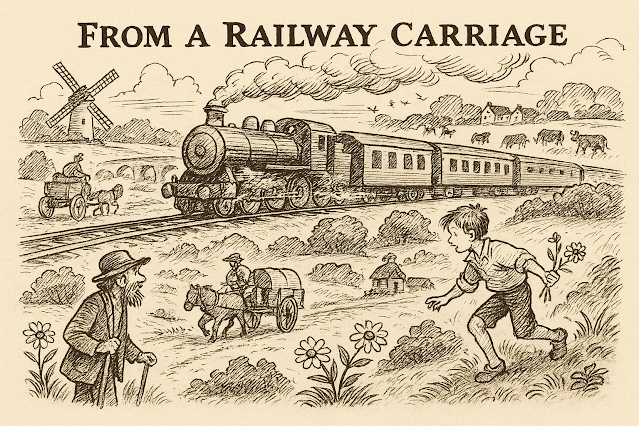
Answer: The poet suggests that a life filled with worries and responsibilities is incomplete if one does not take time to appreciate nature. - What does the illustration accompanying the poem depict?
Answer: The illustration shows a person standing in a peaceful rural setting with a cow, a sheep, and trees. - How does the poem encourage mindfulness?
Answer: The poem encourages mindfulness by reminding readers to pause and enjoy simple moments in nature. - What effect does repetition have in the poem?
Answer: Repetition reinforces the poem’s central idea and makes it more impactful. - How does the poem relate to modern life?
Answer: The poem critiques the fast-paced nature of modern life and encourages people to slow down. - Why do you think the poet chose nature as the focus of the poem?
Answer: Nature represents peace and simplicity, which contrasts with the hurried lives of people. - How can we apply the lesson from Leisure in our daily lives?
Answer: We can set aside time to appreciate nature, avoid constant busyness, and find joy in small moments.