Holding Hands
-Leonore M Link
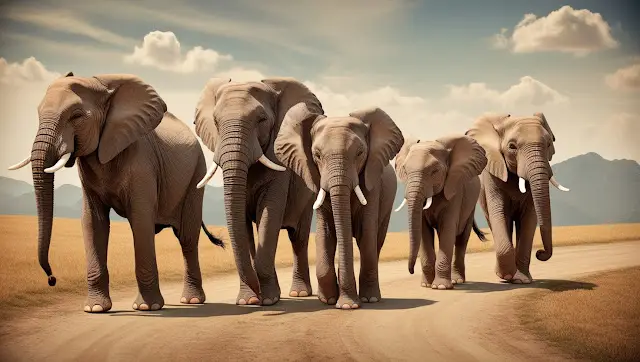
Elephants walking
Along the trails
Are holding hands
By holding tails
Trunks and tails
Are handy things
When elephants walk
In Circus rings.
And when they walk
It never fails
They’re holding hands
By holding tails.

The important words from the poem “Holding Hands” by Leonore M. Link with their Bengali meanings:
| English Word | Bengali Meaning |
| Elephants | হাতিরা |
| Walking | হাঁটা/হাঁটছে |
| Along | বরাবর / ধরে |
| Trails | পথ/পায়ে চলা পথ |
| Holding | ধরে রাখা |
| Hands | হাত |
| Tails | লেজ |
| Trunks | শুঁড় |
| Handy | কাজে লাগে/উপকারী |
| Things | জিনিস |
| Walk | হাঁটা |
| Circus | সার্কাস |
| Rings | মঞ্চ/গোল ঘেরা জায়গা |
| Never | কখনও না |
| Fails | ব্যর্থ হয়/ভুল হয় |
| By | দ্বারা/দিয়ে |
| When | যখন |
| They’re (They are) | তারা |
| Holding hands | হাত ধরে |
| Holding tails | লেজ ধরে |
| Along the trails | পথ ধরে |
| Circus rings | সার্কাসের মঞ্চ/গোল মঞ্চ |
| It never fails | কখনও ভুল হয় না/সব সময়ই ঘটে |
বাংলা অনুবাদ
হাত ধরাধরি
হাতিরা যখন হাঁটে
পথের ধারে ধারে,
তারা যেন হাত ধরে
লেজ ধরে ধরে।
শুঁড় আর লেজ
খুব কাজে লাগে,
যখন হাতিরা হাঁটে
সার্কাসের মঞ্চে।
আর যখন তারা হাঁটে
কখনও ভুল হয় না,
তারা যেন হাত ধরে
লেজ ধরে ধরে।
Line-by-Line Explanation of “Holding Hands” by Leonore M. Link
1. “Elephants walking”
The poet begins by showing elephants moving together. It introduces the subject of the poem—elephants.
2. “Along the trails”
The elephants are walking on paths or trails, possibly in forests or natural areas.
3. “Are holding hands”
The poet compares the elephants’ behavior to humans holding hands. This creates a friendly and playful image.
4. “By holding tails”
Elephants hold the tail of the one in front with their trunks. This is what the poet means by “holding hands.”
5. “Trunks and tails”
The poet points out two important parts of an elephant’s body—the trunk and the tail.
6. “Are handy things”
These body parts are very useful for elephants, especially when they walk together.
7. “When elephants walk”
This line again focuses on the elephants moving together as a group.
8. “In Circus rings.”
Here the poet imagines elephants walking in a circus ring, where they often perform in a line.
9. “And when they walk”
This line repeats the idea of elephants walking together.
10. “It never fails”
This means it always happens without exception.
11. “They’re holding hands”
Again, the poet compares their action to people holding hands.
12. “By holding tails.”
The poem ends by reminding us that elephants look like they are holding hands because they hold each other’s tails with their trunks.
Overall Meaning:
The poem describes how elephants walk in a line by holding the tail of the elephant in front with their trunks, which looks like they are holding hands. It shows their cooperation and togetherness in a simple and fun way.
“Holding Hands” কবিতার সহজ বাংলা ব্যাখ্যা
— Leonore M. Link
এই কবিতায় কবি হাতিদের একসঙ্গে চলার একটি সুন্দর দৃশ্য বর্ণনা করেছেন। হাতিরা যখন সারি বেঁধে হাঁটে, তখন তারা তাদের শুঁড় দিয়ে সামনে থাকা হাতিটির লেজ ধরে রাখে। দেখতে তখন মনে হয় যেন তারা মানুষের মতো হাত ধরাধরি করে হাঁটছে।
কবি বলেছেন, হাতির শুঁড় ও লেজ খুবই কাজে লাগে। কারণ এগুলোর সাহায্যে তারা একে অপরকে ধরে রেখে সহজে ও নিরাপদে হাঁটতে পারে। এমনকি যখন তারা সার্কাসের গোল মঞ্চে হাঁটে, তখনও তারা একইভাবে একে অপরের লেজ ধরে থাকে।
এই কবিতার মাধ্যমে কবি দেখাতে চেয়েছেন যে হাতিরা একসঙ্গে থাকতে ভালোবাসে এবং একে অপরকে সাহায্য করে। তাই কবিতাটি আমাদের একতা, সহযোগিতা এবং বন্ধুত্বের গুরুত্ব শেখায়।
মূল কথা:
হাতিরা একে অপরের লেজ ধরে হাঁটে, যা দেখতে মানুষের হাত ধরার মতো লাগে। এর মাধ্যমে একতা ও সহযোগিতার সুন্দর উদাহরণ দেখানো হয়েছে।
Summary
The poem explains that elephants walk along trails or in circus rings while holding each other’s tails with their trunks. This looks like they are holding hands, just like humans do. The poet uses this image to show teamwork, connection, and care among elephants.
Main Idea
Elephants stay together and help each other by holding tails while walking, which looks like they are holding hands.
Themes
- Friendship and togetherness 🐘
- Cooperation
- Family bonds
Literary Devices
- Imagery: The reader can imagine a line of elephants holding tails.
- Repetition: “Holding hands / By holding tails” is repeated to emphasize the idea.
- Rhythm and rhyme: Words like trails, tails, fails create a smooth rhyme pattern.
Simple Explanation
The poet says elephants look like they are holding hands when they walk because they hold each other’s tails with their trunks. This helps them stay together and move safely as a group.
Answer the following questions.
(a) Why did the poet write the poem “Holding Hands”?
The poet wrote the poem to describe how elephants walk together by holding each other’s tails.
(b) What did the poet try to teach through the poem “Holding Hands”?
The poet tried to teach the importance of togetherness, cooperation, and friendship.
(c) What image did the poet use to denote togetherness in the poem?
The poet used the image of elephants holding each other’s tails like people holding hands.
(d) How are the trunks and tails of the elephants compared with human beings?
The elephants’ trunks and tails are compared with human hands.
(e) Who is the speaker of “Holding Hands”?
The speaker is the poet or narrator who is describing the elephants.
(f) Who did Lenore M. Link write “Holding Hands” for?
She wrote the poem mainly for children.
(g) What does the “circus ring” refer to?
The circus ring refers to the round stage in a circus where animals perform.
(h) Why does the poet call the trunks and tails of the elephants handy?
The poet calls them handy because elephants use them to hold each other’s tails while walking.
FOR MORE PRACTICE
(i) What is the tone of “Holding Hands”?
The tone of the poem is playful, cheerful, and simple.
(j) What is the key theme of the poem Holding Hands?
The key theme is togetherness and cooperation.
(k) Why don’t the elephants fail while walking in the circus ring?
They do not fail because they hold each other’s tails and walk together carefully.
(l) What does the poem suggest about elephants’ behaviour?
The poem suggests that elephants like to stay together and help one another.
(m) What is the central image in the poem?
The central image is elephants walking in a line while holding each other’s tails.
(n) What is the setting of the poem?
The setting is along trails and in a circus ring.
(o) How does the poem reflect the bond between the elephants?
The poem shows their bond by describing how they hold each other’s tails and walk together.
(p) What is the purpose of the poem?
The purpose of the poem is to entertain readers and show the value of togetherness.
(q) What type of language is used in the poem?
The poet uses simple, clear, and rhythmic language.
(r) What is the message that the poet wants to give through the poem?
The message is that unity and cooperation help everyone stay safe and strong.
(s) What does the poem suggest about elephants in circus rings?
It suggests that elephants perform together in a line by holding each other’s tails.
(t) What do the lines “Trunks and tails / Are handy things” mean?
It means elephants’ trunks and tails are useful because they help them hold each other and walk together.
(u) What lesson can we learn from the poem?
We learn that staying united and helping each other is important.