Whose Child is This?
“Whose child is this?” I asked one day
Seeing a little one out at play.
“Mine”, said the parent with a tender smile.
“Mine to keep a little while
To bathe his hands and comb his hair,
To tell him what he is to wear,
To prepare him that he may always be good
And each day do the things he should.”
“Whose child is this?” I asked again,
As the door opened and someone came in
“Mine”, said the teacher with the same tender smile.
“Mine to keep just for a little while.
To teach him how to be gentle and kind.
To train and direct his dear little mind,
To help him live by every rule
And get the best he can from school.”
“Whose child is this?” I ask once more,
Just as the little one entered the door.
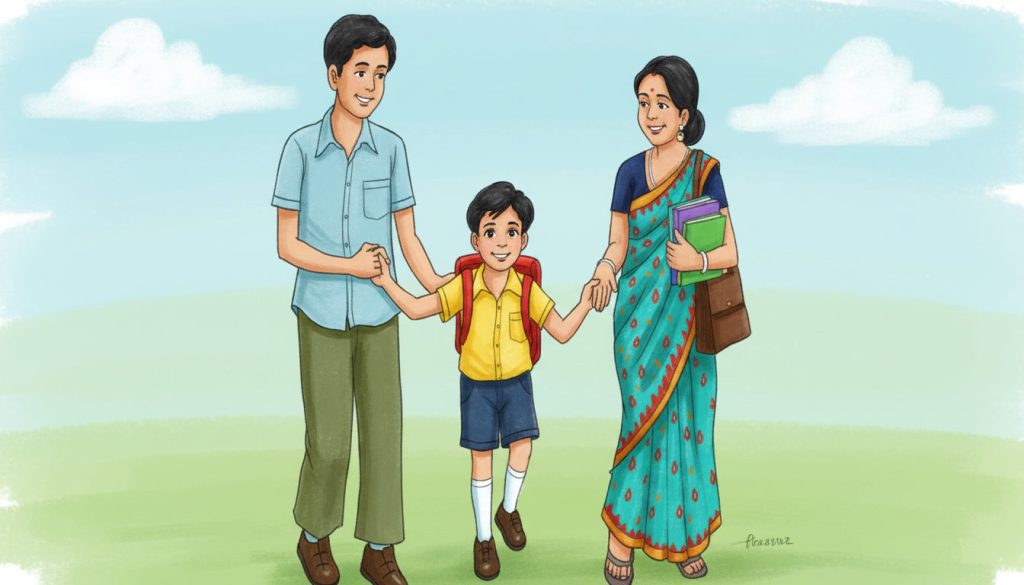
“Ours”, said the parent and the teacher as they smiled,
And each took the hand of the little child.
“Ours to love and train together Ours this blessed task forever.”
“Whose Child is This?” — Line‑by‑Line Translation
“Whose child is this?” I asked one day
“এটা কার সন্তান?” একদিন আমি জিজ্ঞেস করলাম।
Seeing a little one out at play.
একটি ছোট্ট শিশুকে বাইরে খেলতে দেখে।
“Mine”, said the parent with a tender smile.
“আমার”, কোমল হাসি দিয়ে বললেন অভিভাবক।
“Mine to keep a little while
“অল্প সময়ের জন্য আমার কাছে রাখার,
To bathe his hands and comb his hair,
তার হাত ধোয়ানোর ও চুল আঁচড়িয়ে দেওয়ার,
To tell him what he is to wear,
সে কী পরবে তা বলে দেওয়ার,
To prepare him that he may always be good
তাকে প্রস্তুত করার যেন সে সবসময় ভালো থাকে
And each day do the things he should.”
এবং প্রতিদিন সে যা করা উচিত তা করে।”
“Whose child is this?” I asked again,
“এটা কার সন্তান?” আমি আবার জিজ্ঞেস করলাম,
As the door opened and someone came in
যখন দরজা খুলে কেউ ভেতরে এলো।
“Mine”, said the teacher with the same tender smile.
“আমার”, একই কোমল হাসি দিয়ে বললেন শিক্ষক।
“Mine to keep just for a little while.
“অল্প সময়ের জন্য আমার কাছে থাকে।
To teach him how to be gentle and kind.
তাকে কীভাবে নম্র ও দয়ালু হতে হয় তা শেখানোর,
To train and direct his dear little mind,
তার ছোট্ট মনকে প্রশিক্ষণ ও পথনির্দেশ দেওয়ার,
To help him live by every rule
প্রতিটি নিয়ম মেনে চলতে তাকে সাহায্য করার,
And get the best he can from school.”
এবং স্কুল থেকে সে যেন সর্বোচ্চটি পায় তা নিশ্চিত করার।”
“Whose child is this?” I ask once more,
“এটা কার সন্তান?” আমি আবারও জিজ্ঞেস করলাম,
Just as the little one entered the door.
ঠিক তখনই ছোট্টটি দরজা দিয়ে প্রবেশ করল।
“Ours”, said the parent and the teacher as they smiled,
“আমাদের”, হাসিমুখে বললেন অভিভাবক ও শিক্ষক দু’জনেই,
And each took the hand of the little child.
এবং দু’জনেই শিশুটির হাত ধরলেন।
“Ours to love and train together
“আমাদের — একসঙ্গে ভালোবাসা ও গড়ে তোলার,
Ours this blessed task forever.”
এই আশীর্বাদপূর্ণ দায়িত্ব আমাদের চিরদিনের।”
Word List from the Poem with Bengali Meanings
| English Word | Bengali Meaning |
| child | শিশু/সন্তান |
| asked | জিজ্ঞেস করলাম |
| seeing | দেখে/দেখার সময় |
| little one | ছোট্ট শিশু |
| out at play | বাইরে খেলছে |
| parent | অভিভাবক |
| tender | কোমল |
| smile | হাসি |
| mine | আমার |
| keep | রাখা |
| little while | অল্প সময়ের জন্য |
| bathe | গোসল করানো/ধোয়ানো |
| comb | চিরুনি করা/আঁচড়ানো |
| hair | চুল |
| tell | বলা |
| wear | পরা |
| prepare | প্রস্তুত করা |
| good | ভালো |
| each day | প্রতিদিন |
| things | কাজ/বিষয় |
| door | দরজা |
| opened | খুলল |
| someone | কেউ |
| came in | ভেতরে এলো |
| teacher | শিক্ষক |
| gentle | নম্র |
| kind | দয়ালু |
Summary of the Poem
The poem “Whose Child is This?” highlights the shared responsibility of raising and guiding a child. At first, the speaker asks a parent whose child is playing outside, and the parent lovingly explains their role — to nurture, care for, and teach the child how to live a good and disciplined life.
When the question is asked again, the teacher appears and claims the child as theirs for a short time each day. The teacher explains their duty — to teach the child kindness, discipline, knowledge, and how to follow rules so they can make the most of their school experience.
Finally, both the parent and the teacher answer together, saying the child belongs to both of them. They acknowledge that raising a child is a shared, lifelong responsibility. The poem emphasizes cooperation, love, and joint effort in guiding a child’s growth — at home and at school.
বাংলায় সারাংশ — “Whose Child Is This?”
কবিতাটি দেখায় যে একটি শিশুকে বড় করে তোলা শুধু বাবা‑মায়ের কাজ নয়, শিক্ষকেরও সমান দায়িত্ব। প্রথমে কবি যখন জিজ্ঞেস করেন—“এটা কার সন্তান?”, তখন অভিভাবক জানান যে তিনি ভালোবাসা, যত্ন, শৃঙ্খলা ও দৈনন্দিন আচরণ দিয়ে শিশুকে মানুষ করেন।
পরে একই প্রশ্নের উত্তরে শিক্ষক বলেন, তিনিও শিশুটিকে নিজের মনে করেন, কারণ তিনি তাকে নম্রতা, দয়া, নিয়মমাফিক চলা ও পড়াশোনায় উন্নতি করার পথ দেখান।
সবশেষে বাবা‑মা ও শিক্ষক দু’জনেই বলেন—শিশুটি তাদের দু’জনেরই। তারা বুঝিয়ে দেন যে একটি শিশুর সঠিক বিকাশের জন্য পরিবার ও বিদ্যালয়ের মিলিত প্রচেষ্টা অত্যন্ত জরুরি। ভালোবাসা, দিকনির্দেশনা ও সহযোগিতার মাধ্যমেই একটি শিশু তার সেরা মানুষে পরিণত হয়।
Themes of the Poem “Whose Child Is This?”
1. Shared Responsibility
The poem highlights that raising and guiding a child is not the job of one person alone. Both parents and teachers share this responsibility with love and care.
2. Cooperation Between Home and School
The poem emphasizes the importance of teamwork. A child grows best when parents and teachers work together, support each other, and guide the child in the same direction.
3. Love and Nurturing
Both the parent and the teacher show love for the child. The poem shows that love plays a central role—whether it is at home or in school.
4. Moral and Character Development
The parent teaches daily habits and good behavior, while the teacher focuses on kindness, discipline, and following rules. The poem shows that shaping a child’s character is a combined effort.
5. Education as a Lifelong Foundation
The teacher’s role in building the child’s mind and preparing them for life is highlighted. Learning is seen as an important part of the child’s growth.
6. Unity and Togetherness
In the end, both parent and teacher say “Ours,” showing unity. This theme reinforces the idea that a child belongs to the whole community of caregivers.
Answers to the Questions
1. Who asked the question, “Whose Child is This?” in the poem?
The speaker or narrator of the poem asked the question.
2. How many times did he/she ask the question, “Whose child is this?”
The question was asked three times.
3. Who answered the question in stanzas 1, 2, and 3?
- Stanza 1: The parent answered.
- Stanza 2: The teacher answered.
- Stanza 3: Both the parent and the teacher answered together.
More Questions
1. Where was the child when the narrator first saw him?
When the narrator first saw the child, He was outside at play.
2. What was the child doing when the narrator noticed him?
When the narrator noticed him, he was playing.
3. How did the parent respond to the narrator’s question?
The parent said, “Mine,” with a tender smile.
4. What did the parent say about bathing the child?
The parent said it was their duty “to bathe his hands.”
5. What did the parent say about combing the child’s hair?
The parent said they comb his hair.
6. What did the parent prepare the child for?
To help him always be good and do the things he should.
7. Who entered the door in the second stanza?
The teacher entered.
8. How did the teacher smile when answering the question?
The teacher smiled tenderly, just like the parent.
9. What did the teacher claim the child as?
The teacher also said, “Mine.”
10. What does the teacher teach the child to be?
Gentle and kind.
11. What part of the child does the teacher train and direct?
The child’s mind.
12. What does the teacher help the child follow?
Every rule.
13. What does the teacher want the child to get from school?
The best he can.
14. When did the narrator ask the question for the third time?
When the little child entered the door.
15. Who answered the question together in the final stanza?
The parent and the teacher together.
16. Why does the narrator repeat the question more than once?
To show how different people share responsibility for the child.
17. How are the parent’s duties toward the child described?
Caring, nurturing, and teaching good habits.
18. How are the teacher’s duties different from the parent’s?
The teacher focuses on shaping the mind, discipline, and learning.
19. What similarities do the parent and teacher share?
Both love the child and want the best for him.
20. What is the meaning of the word “tender” in the poem?
Soft, gentle, and loving.
21. Why does the teacher say the child is theirs “just for a little while”?
Because the teacher cares for the child only during school hours.
22. What does the poem suggest about the role of a school?
A school guides, trains, and builds the child’s character and mind.
23. What does the poem suggest about the role of a family?
Family nurtures, cares for, and teaches daily life values.
24. Why do both the parent and teacher say “ours” in the last stanza?
They understand they must work together to raise the child.
25. What message does the poem give about teamwork in raising a child?
Parents and teachers must work in unity for the child’s best growth.
26. How does the poem show the importance of guidance in childhood?
By describing how both home and school guide the child in behavior and learning.
27. Why is cooperation between home and school important?
Because both shape different parts of a child’s development.
28. What qualities do both the parent and teacher want the child to develop?
Good behavior, kindness, discipline, and understanding.
29. How does the poet use repetition to emphasize the message?
Repeating “Whose child is this?” highlights shared responsibility.
30. What is the central theme of the poem?
A child belongs to both parents and teachers, and both must work together to nurture him.
31. How might the child benefit from having both a caring parent and teacher?
He receives emotional support at home and educational guidance at school.
32. Why do you think the poet ends with the word “forever”?
To show that loving and guiding a child is a lifelong responsibility.
33. If you were the child, how would you feel knowing both care for you?
Loved, supported, and safe.