The Wheel of Cyclone
Read the text and answer the following questions.
On the afternoon of March 17, 1978, the weather took an odd turn in north Delhi. Mid-March is usually a nice time of year in that part of India: the chill of winter is gone, and the blazing heat of summer is yet to come; the sky is clear and monsoon is far away. But that day dark clouds appeared suddenly and there were squalls of rain. Then followed an even bigger surprise: a hailstorm.
I was then studying for an MA at Delhi University while also working as a part-time journalist. When the hailstorm broke, I was in a library. I had planned to stay late, but the unseasonal weather led to a change of mind and I decided to leave. I was on my way back to my room when, on an impulse, I changed direction and dropped in on a friend’s. But the weather continued to worsen as we were chatting, so after a few minutes, I decided to head straight back by a route that I rarely had occasion to take.
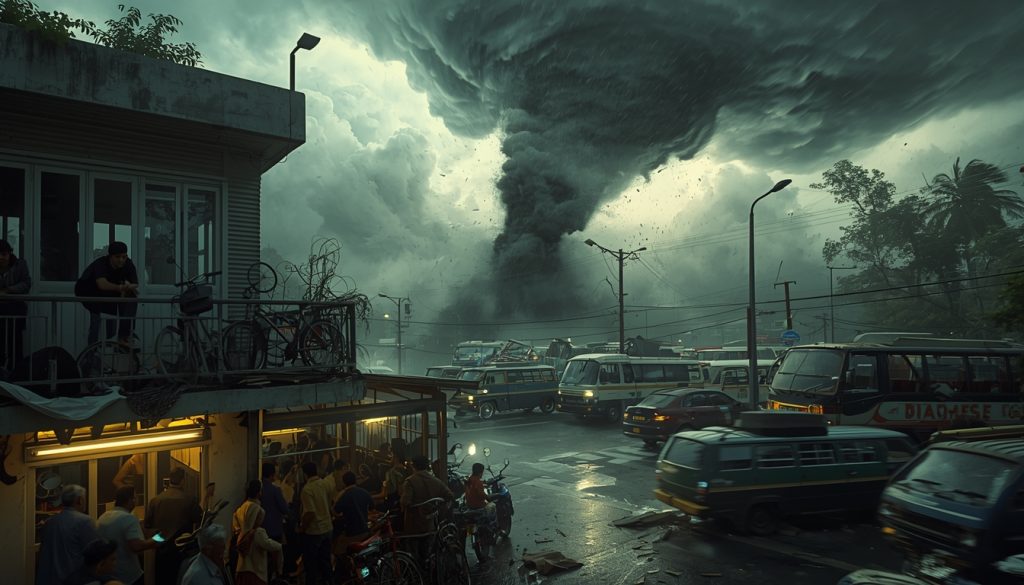
I had just passed a busy intersection called Maurice Nagar when I heard a rumbling sound somewhere above. Glancing over my shoulder I saw a gray, tube-like extrusion forming on the underside of a dark cloud: it grew rapidly as I watched, and then all of a sudden it turned and came whiplashing down to earth, heading in my direction.
Across the street lay a large administrative building. I sprinted over and headed toward what seemed to be an entrance. But the glass-fronted doors were shut, and a small crowd stood huddled outside, in the shelter of an overhang. There was no room for me there so I ran around to the front of the building. Spotting a small balcony, I jumped over the parapet and crouched on the floor.
The noise quickly rose to a frenzied pitch, and the wind began to tug fiercely at my clothes. Stealing a glance over the parapet, I saw, to my astonishment, that my surroundings had been darkened by a churning cloud or dust. In the dim glow that was shining down from above, I saw an extraordinary panoply of objects flying past-bicycles, scooters, lampposts, sheets of corrugated iron, even entire tea stalls. In that instant, gravity itself seemed to have been transformed into a wheel spinning upon the fingertip of some unknown power.
I buried my head in my arms and lay still. Moments later the noise died down and was replaced by an eerie silence. When at last I climbed out of the balcony, I was confronted by a scene of devastation such as I had never before beheld. Buses lay overturned, scooters sat perched on treetops, walls had been ripped out of buildings, exposing interiors in which ceiling fans had been twisted into tulip-like spirals. The place where I had first thought to take shelter, the glass-fronted doorway had been reduced to a jumble of jagged debris. The panes had shattered and many people had been wounded by the shards. I realised that I too would have been among the injured had I remained there. I walked away in a daze.
Long afterward, I am not sure exactly when or where I hunted down the Times of India’s New Delhi edition of March 18, I still have the photocopies I made of it. “30 dead”, says the banner headline, “700 Hurt As Cyclone Hits North Delhi.”
Vocabulary List with Bengali Meanings
- administrative — প্রশাসনিক
- administrative building — প্রশাসনিক ভবন
- afterward — পরে
- astonishment — বিস্ময়
- attic (exposed interiors implied) — ভেতরের অংশ / অভ্যন্তর
- balcony — বারান্দা
- banner headline — প্রধান শিরোনাম
- beheld — দেখেছিলাম
- blazing — প্রচণ্ড গরম
- buried my head — মাথা নিচু করে থাকা
- buses overturned — উল্টে যাওয়া বাস
- bystanders — দর্শক বা আশেপাশের মানুষ
- chatting — আড্ডা দেওয়া
- chill — শীতলতা / ঠান্ডা
- churning — ঘূর্ণায়মান
- churning cloud — ঘূর্ণায়মান মেঘ
- corrugated iron — ঢেউটিন
- crouched — কুঁকড়ে বসা
- crowd — ভিড়
- cyclone — ঘূর্ণিঝড়
- dark clouds — কালো মেঘ
- dazed — হতবুদ্ধি / স্তম্ভিত
- dead — মৃত
- debris — ধ্বংসাবশেষ
- devastation — ধ্বংসযজ্ঞ
- dim glow — ম্লান আলো
- disaster — বিপর্যয়
- dust cloud — ধুলোর মেঘ
- edition — সংস্করণ
- eerie — ভৌতিক
- eerie silence — ভৌতিক নীরবতা
- entrance — প্রবেশদ্বার
- extrusion — বেরিয়ে আসা নলাকার অংশ
- fans twisted — পাকানো পাখা
- fiercely — প্রচণ্ডভাবে
- fingertip (metaphorical) — আঙুলের ডগা
- flew past — উড়ে চলে গেল
- glancing — এক নজর দেখা
- gravity — মাধ্যাকর্ষণ
- gray — ধূসর
- hailstorm — শিলাবৃষ্টি
- headed toward — কোনদিকে যাওয়া
- heard — শুনেছিলাম
- huddled — গুটিসুটি হয়ে দাঁড়ানো
- hurt — আহত
- impulse — হঠাৎ ইচ্ছা
- injured — আহত
- interiors — অভ্যন্তর
- intersection — সড়ক মোড়
- jagged — খাঁজকাটা
- jagged debris — খাঁজকাটা ধ্বংসাবশেষ
- jumped over — লাফিয়ে পার হওয়া
- jumped over — লাফিয়ে পার হওয়া
- lampposts — ল্যাম্পপোস্ট
- lay still — স্থির হয়ে শুয়ে থাকা
- library — গ্রন্থাগার
- Maurice Nagar — মরিস নগর (স্থাননাম)
- meaningless heat (blazing heat) — প্রচণ্ড গরম
- moments later — কিছুক্ষণ পর
- monsoon — বর্ষা
- munching down / whiplashing down — চাবুকের মতো নেমে আসা
- noise — শব্দ
- north Delhi — উত্তর দিল্লি
- odd turn — অস্বাভাবিক পরিবর্তন
- overhang — ছাউনি / ঝুলন্ত ছাদ
- overturned — উল্টে গেছে
- panoply — প্রদর্শনী / বিস্তৃত বৈচিত্র্য
- panoply of objects — নানা রকম জিনিসের সমাহার
- parapet — ছাদের রেলিং বা প্রাচীর
- parapet — রেলিংবিশিষ্ট প্রাচীর
- passed — পেরোনো
- photocopies — ফটোকপি
- power (unknown power) — অজানা শক্তি
- rarely — খুব কম
- realised — বুঝলাম
- ripped out — ছিঁড়ে নেওয়া
- route — পথ / রাস্তা
- rumbling — গর্জনধ্বনি
- rumbling sound — গর্জনধ্বনি
- scene of devastation — ধ্বংসস্তূপের দৃশ্য
- scooters — স্কুটার
- shards — ভাঙা টুকরো (বিশেষ করে কাঁচ)
- sheets — পাত/চাদর
- shelter — আশ্রয়
- shining down — ওপর থেকে আলো পড়ছিল
- sprinted — দ্রুত দৌড়ে যাওয়া
- squalls — ঝোড়ো হাওয়া
- squalls — ঝোড়ো হাওয়া
- started worsening — খারাপ হতে লাগল
- surprise — বিস্ময়
- tea stalls — চা দোকান
- took shelter — আশ্রয় নিয়েছিলাম
- tornado-like cloud — ঘূর্ণিঝড় সদৃশ মেঘ
- transformed — রূপান্তরিত
- tube-like — নলাকার
- tube-like extrusion — নলাকার বের হওয়া অংশ
- twisted into spirals — পাকিয়ে সর্পিল হয়েছে
- und erside — নিচের দিক
- unknown power — অজানা শক্তি
- unseasonal — অমৌসুমি / অনিয়মিত
- vicious wind (fierce tugging) — প্রচণ্ড বাতাস
- weather — আবহাওয়া
- whiplashing down — চাবুকের মতো নেমে আসা
- wounded — আহত
Line‑by‑Line Bangla Translation
1. On the afternoon of March 17, 1978, the weather took an odd turn in north Delhi.
১৯৭৮সালের১৭মার্চবিকেলেউত্তরদিল্লিরআবহাওয়াহঠাৎঅদ্ভুতরূপনিল।
2. Mid-March is usually a nice time of year in that part of India: the chill of winter is gone, and the blazing heat of summer is yet to come; the sky is clear and monsoon is far away.
👉 ভারতের ওই অঞ্চলে মার্চের মাঝামাঝি সময়টা সাধারণত খুবই মনোরম—শীতের ঠান্ডা কেটে যায়, গ্রীষ্মের প্রচণ্ড তাপ এখনো আসে‑নি; আকাশ থাকে পরিষ্কার, আর বর্ষাকালও অনেক দূরে।
3. But that day dark clouds appeared suddenly and there were squalls of rain.
👉 কিন্তু সেদিন হঠাৎ কালো মেঘ জমে গেল এবং ঝোড়ো হাওয়াসহ বৃষ্টি নামল।
4. Then followed an even bigger surprise: a hailstorm.
👉 তারপর আরও বড় বিস্ময় দেখা দিল—শিলাবৃষ্টি শুরু হলো।
5. I was then studying for an MA at Delhi University while also working as a part-time journalist.
👉 তখন আমি দিল্লি বিশ্ববিদ্যালয়ে এমএ‑তে পড়ছিলাম এবং পাশাপাশি আংশিক সময়ের সাংবাদিকতা করতাম।
6. When the hailstorm broke, I was in a library.
👉 শিলাবৃষ্টি শুরু হওয়ার সময় আমি লাইব্রেরিতে ছিলাম।
7. I had planned to stay late, but the unseasonal weather led to a change of mind and I decided to leave.
👉 দেরি পর্যন্ত থাকার পরিকল্পনা ছিল, কিন্তু এই অমৌসুমি আবহাওয়া আমাকে মন বদলাতে বাধ্য করল এবং আমি বেরিয়ে যাওয়ার সিদ্ধান্ত নিলাম।
8. I was on my way back to my room when, on an impulse, I changed direction and dropped in on a friend’s.
👉 ঘরে ফেরার পথে হঠাৎ ইচ্ছায় দিক বদলে এক বন্ধুর বাসায় ঢুকে পড়লাম।
9. But the weather continued to worsen as we were chatting, so after a few minutes, I decided to head straight back by a route that I rarely had occasion to take.
👉 কিন্তু আমরা কথা বলার সময় আবহাওয়া আরও খারাপ হতে লাগল, তাই কয়েক মিনিট পরে আমি এমন একটি পথ দিয়ে সরাসরি ঘরে ফিরতে সিদ্ধান্ত নিলাম, যেটা আমি খুব কমই ব্যবহার করতাম।
10. I had just passed a busy intersection called Maurice Nagar when I heard a rumbling sound somewhere above.
👉 মরিস নগর নামে একটি ব্যস্ত মোড় পেরোনোর পরই ওপরে কোথাও থেকে গর্জনের মতো শব্দ শুনলাম।
11. Glancing over my shoulder I saw a gray, tube-like extrusion forming on the underside of a dark cloud:
👉 পিছনে তাকিয়ে দেখি, একটি কালো মেঘের নিচে ধূসর, নলাকার একটি অংশ তৈরি হচ্ছে—
12. it grew rapidly as I watched,
👉 আমি তাকিয়ে থাকতে থাকতেই সেটা দ্রুত বড় হতে লাগল,
13. and then all of a sudden it turned and came whiplashing down to earth, heading in my direction.
👉 আর হঠাৎই সেটা ঘুরে গিয়ে চাবুকের মতো নিচে নেমে এলো—সোজা আমার দিকে।
14. Across the street lay a large administrative building.
👉 রাস্তার ওপারে একটি বড় প্রশাসনিক ভবন ছিল।
15. I sprinted over and headed toward what seemed to be an entrance.
👉 আমি দৌড়ে সেখানে গিয়ে একটি প্রবেশদ্বারের মতো জায়গার দিকে ছুটলাম।
16. But the glass-fronted doors were shut, and a small crowd stood huddled outside, in the shelter of an overhang.
👉 কিন্তু কাঁচের দরজাগুলো বন্ধ ছিল, আর একটি ছোট ভিড় ছাদের নিচে গুটিসুটি হয়ে দাঁড়িয়ে ছিল।
17. There was no room for me there so I ran around to the front of the building.
👉 সেখানে আমার দাঁড়ানোর জায়গা ছিল না, তাই আমি ভবনের সামনে দিকে দৌড়ালাম।
18. Spotting a small balcony, I jumped over the parapet and crouched on the floor.
👉 একটি ছোট বারান্দা দেখতে পেয়ে রেলিং টপকে ভেতরে লাফিয়ে পড়লাম এবং মেঝেতে কুঁকড়ে বসলাম।
19. The noise quickly rose to a frenzied pitch, and the wind began to tug fiercely at my clothes.
👉 শব্দ দ্রুত উন্মত্ত গর্জনে পরিণত হলো, আর বাতাস আমার কাপড় ধরে প্রবলভাবে টানতে লাগল।
20. Stealing a glance over the parapet, I saw, to my astonishment, that my surroundings had been darkened by a churning cloud of dust.
👉 বারান্দার রেলিংয়ের ওপর দিয়ে তাকাতেই বিস্ময়ে দেখলাম, আমার চারপাশ ধুলোর ঘূর্ণির মতো মেঘে ঢেকে গেছে।
21. In the dim glow that was shining down from above, I saw an extraordinary panoply of objects flying past—bicycles, scooters, lampposts, sheets of corrugated iron, even entire tea stalls.
👉 ওপরে থেকে আসা ম্লান আলোতে দেখলাম, বিচিত্র সব জিনিস উড়ে যাচ্ছে—সাইকেল, স্কুটার, ল্যাম্পপোস্ট, ঢেউটিন, এমনকি পুরো চায়ের দোকান পর্যন্ত।
22. In that instant, gravity itself seemed to have been transformed into a wheel spinning upon the fingertip of some unknown power.
👉 সেই মুহূর্তে মনে হচ্ছিল মাধ্যাকর্ষণ নিজেই যেন কোনও অজানা শক্তির আঙুলের ডগায় ঘুরতে থাকা চাকার মতো হয়ে গেছে।
23. I buried my head in my arms and lay still.
👉 আমি মাথা দু’হাতের মাঝে গুঁজে চুপচাপ শুয়ে রইলাম।
24. Moments later the noise died down and was replaced by an eerie silence.
👉 কিছুক্ষণ পরে শব্দ থেমে গিয়ে তার জায়গায় এক ভৌতিক নীরবতা নেমে এলো।
25. When at last I climbed out of the balcony, I was confronted by a scene of devastation such as I had never before beheld.
👉 অবশেষে বারান্দা থেকে বেরোতেই এমন ধ্বংসযজ্ঞের দৃশ্য দেখলাম, যা আগে কখনও দেখিনি।
26. Buses lay overturned, scooters sat perched on treetops,
👉 বাস উল্টে পড়ে আছে, স্কুটার গিয়ে গাছে উঠে বসেছে,
27. walls had been ripped out of buildings, exposing interiors in which ceiling fans had been twisted into tulip-like spirals.
👉 ভবনের দেয়াল ছিঁড়ে উড়ে গেছে, ভেতরের অংশ দেখা যাচ্ছে, যেখানে সিলিং ফ্যান ফুলের কুঁড়ির মতো পাকিয়ে গেছে।
28. The place where I had first thought to take shelter, the glass-fronted doorway had been reduced to a jumble of jagged debris.
👉 যেখানে প্রথমে আশ্রয় নেওয়ার কথা ভেবেছিলাম—সেই কাঁচের দরজার জায়গাটা খাঁজকাটা ধ্বংসাবশেষে পরিণত হয়েছে।
29. The panes had shattered and many people had been wounded by the shards.
👉 কাঁচের টুকরো ছিটকে অনেক মানুষ আহত হয়েছে।
30. I realised that I too would have been among the injured had I remained there.
👉 আমি বুঝলাম, ওখানে থাকলে আমিও আহত হতাম।
31. I walked away in a daze.
👉 আমি হতবুদ্ধি হয়ে সেখান থেকে হেঁটে বেরিয়ে এলাম।
32. Long afterward, I am not sure exactly when or where I hunted down the Times of India’s New Delhi edition of March 18,
👉 অনেক পরে—ঠিক কখন বা কোথায় মনে নেই—আমি টাইমস অব ইন্ডিয়া–র ১৮ মার্চের দিল্লি সংস্করণ খুঁজে পেয়েছিলাম,
33. I still have the photocopies I made of it.
👉 এর যে ফটোকপি করেছিলাম, তা এখনো আমার কাছে আছে।
34. “30 dead”, says the banner headline, “700 Hurt As Cyclone Hits North Delhi.”
👉 বড় শিরোনামে লেখা ছিল: “৩০ জন নিহত, ৭০০ আহত—ঘূর্ণিঝড়ে বিধ্বস্ত উত্তর দিল্লি।”
বাংলা অনুবাদ
১৯৭৮ সালের ১৭ মার্চ, বিকেলের দিকে উত্তর দিল্লির আবহাওয়া হঠাৎ অদ্ভুত রূপ নিল। বছরের এই সময়টায় সাধারণত আবহাওয়া সুন্দর থাকে: শীতের ঠান্ডা কেটে গেছে, আবার গরমের প্রচণ্ড দাবদাহও এখনও আসে‑নাই; আকাশ থাকে পরিষ্কার, আর বর্ষাকালও অনেক দূরে। কিন্তু সেদিন হঠাৎ কালো মেঘ জমল এবং ঝোড়ো বাতাসে বৃষ্টি নামল। তারপর আরও বড় বিস্ময়—শিলাবৃষ্টি শুরু হলো।
সেই সময় আমি দিল্লি বিশ্ববিদ্যালয়ে এমএ‑তে পড়তাম, পাশাপাশি আংশিক সময়ের সাংবাদিকতার কাজও করতাম। শিলাবৃষ্টি শুরু হওয়ার সময় আমি লাইব্রেরিতে ছিলাম। দেরি পর্যন্ত থাকার পরিকল্পনা ছিল, কিন্তু এই অনিয়মিত আবহাওয়া আমাকে মন বদলাতে বাধ্য করল, তাই বেরিয়ে পড়লাম। নিজের ঘরে ফেরার পথে হঠাৎ মনে হলো বন্ধুর বাসায় একটু যাই। কিন্তু আমরা আড্ডা দিচ্ছিলাম, আর তখনই আবহাওয়া আরও খারাপ হতে লাগল। তাই কয়েক মিনিটের মধ্যেই সিদ্ধান্ত নিলাম সরাসরি নিজের ঘরে ফিরে যাব—একটা রাস্তা দিয়ে, যেটা আমি খুব কমই ব্যবহার করতাম।
মরিস নগর নামে একটি ব্যস্ত মোড় পেরোনোর পরই ওপরে কোথাও থেকে এক ধরনের গর্জন শুনলাম। পিছনে তাকিয়ে দেখি, এক টুকরো ধূসর, নলাকার কিছু একটা অদ্ভুতভাবে কালো মেঘের নিচ থেকে নেমে আসছে — আর আমি তাকিয়ে থাকতে থাকতেই সেটা দ্রুত বড় হতে লাগল। হঠাৎই সেটা ঘুরে গিয়ে চাবুকের মতো নেমে এলো মাটির দিকে — সোজা আমার দিকেই।
রাস্তার ওপারে একটি বড় প্রশাসনিক ভবন ছিল। আমি দৌড়ে সেদিকে গেলাম এবং একটা প্রবেশদ্বার মনে হওয়া জায়গার দিকে ছুটলাম। কিন্তু কাঁচের দরজাগুলো বন্ধ ছিল, আর একটি ছোট ভিড় আশ্রয়ের জন্য ছাদের নিচে গুটিসুটি হয়ে দাঁড়িয়েছিল। সেখানে আমার দাঁড়ানোর জায়গা ছিল না, তাই ভবনের সামনে দৌড়ে গেলাম। একটি ছোট বারান্দা চোখে পড়তেই রেলিং টপকে ভেতরে লাফিয়ে পড়লাম এবং মেঝেতে কুঁকড়ে বসলাম।
শব্দ দ্রুত উন্মত্ত গর্জনে পরিণত হলো, আর বাতাস আমার কাপড় ধরে প্রচণ্ড টানতে লাগল। একটু সাহস করে বারান্দার রেলিংয়ের ওপর দিয়ে তাকাতেই অবাক হয়ে দেখি, আমার আশপাশ ধুলার ঘূর্ণির মতো কিছুতে ঢেকে গেছে। উপরের ক্ষীণ আলোতে দেখলাম, চারপাশে উড়ে যাচ্ছে বিচিত্র সব জিনিস—সাইকেল, স্কুটার, ল্যাম্পপোস্ট, টিনের চাদর, এমনকি পুরো চায়ের দোকান পর্যন্ত। সেই মুহূর্তে মনে হচ্ছিল মাধ্যাকর্ষণ যেন কোনও অজানা শক্তির আঙুলের ওপর ঘুরতে থাকা চাকার মতো হয়ে গেছে।
আমি মাথা দু’হাতের মাঝে গুঁজে চুপচাপ শুয়ে রইলাম। মুহূর্ত পরই সব শব্দ থেমে গিয়ে এক ভৌতিক নীরবতা নেমে এলো। বারান্দা থেকে বেরিয়ে আসতেই এমন এক ধ্বংসযজ্ঞের চিত্র দেখলাম যা আগে কখনও চোখে পড়েনি। বাস উল্টে পড়ে আছে, স্কুটার গিয়ে গাছে উঠে বসেছে, ভবনের দেয়াল ছিঁড়ে উড়ে গেছে, আর ভেতরে থাকা সিলিং ফ্যানগুলো ফুলের কুঁড়ির মতো পাকিয়ে গেছে। যেখানে প্রথম আশ্রয় নিতে চেয়েছিলাম—সেই কাঁচের দরজার জায়গাটা সম্পূর্ণ ধ্বংসস্তূপ হয়ে আছে। কাঁচের টুকরো ছিটকে অনেককে জখম করেছে। বুঝলাম, ওখানে থাকলে আমিও আহত হতাম। আমি যেন স্বপ্নের মতো হাঁটতে হাঁটতে সেখান থেকে বেরিয়ে এলাম।
অনেক পরে—ঠিক কখন বা কোথায় মনে নেই—টাইমস অব ইন্ডিয়া‑র ১৮ মার্চের দিল্লি সংস্করণ খুঁজে বের করেছিলাম। আজও এর ফটোকপিগুলো আমার কাছে আছে। প্রথম পাতার ব্যানার শিরোনাম বলছে: “৩০ জন নিহত, ৭০০ আহত — ঘূর্ণিঝড়ে বিধ্বস্ত উত্তর দিল্লি।”
Answer the following questions
(a) What do you mean by the title “The Great Derangement”? What reasons are there for our environment to be deranged?
“The Great Derangement” refers to the human inability to recognize and respond to extreme weather events caused by climate change.
The environment is “deranged” because unusual, unpredictable, and extreme weather—like sudden storms, cyclones, and temperature shifts—are occurring due to human-made environmental damage.
(b) Describe the weather of 17th March 1978 in the light of the story “The Wheel of Cyclone.”
On 17 March 1978, the weather in North Delhi suddenly turned strange: dark clouds formed unexpectedly, squalls of rain came, and then an unseasonal hailstorm. Soon, a tornado‑like cyclone formed and struck the city.
(c) What job did the author do while studying in Delhi in the story “The Wheel of Cyclone”?
He was studying for an MA at Delhi University and working as a part‑time journalist.
(d) What steps did the author take to save himself when the cyclone hit North Delhi?
- He ran across the street toward a large administrative building.
- When he couldn’t enter because the glass doors were shut, he ran to the front.
- He jumped over a parapet onto a small balcony and crouched there for safety.
(e) What time of day did the weather change in Delhi in the story “The Wheel of Cyclone”?
The weather changed in the afternoon.
(f) What was the author’s immediate reaction to the changing weather in the story “The Wheel of Cyclone”?
His plans changed—he left the library earlier than intended.
Then, due to worsening weather, he left his friend’s room and headed home.
(g) What protective measures did the author’s surroundings offer in the story “The Wheel of Cyclone”?
The balcony and its parapet offered partial shelter.
The structure protected him from flying debris and strong winds.
(h) How does the author describe the atmosphere before the storm in the story “The Wheel of Cyclone”?
The atmosphere suddenly darkened. A rumbling sound came from above, and a gray tube‑like cloud began forming rapidly. The surroundings dimmed under a swirling cloud of dust.
QUESTIONS FOR MORE PRACTICE
(i) Why is the author’s experience in Delhi significant in the story “The Wheel of Cyclone”?
It is significant because he personally witnessed one of the rare tornado‑like storms in Delhi, giving firsthand insight into the unexpected violence of climate events.
(j) Did the author anticipate the storm in the story “The Wheel of Cyclone”?
No. He did not anticipate it at all—the weather changed suddenly and without warning.
(k) What did the cyclone’s noise signify in the story “The Wheel of Cyclone”?
The increasing, frenzied noise showed the growing intensity and destructive power of the cyclone.
(l) What damage did the cyclone cause in North Delhi in the story “The Wheel of Cyclone”?
- Buildings were damaged
- Walls were ripped out
- Ceiling fans twisted into spirals
- Buses overturned
- Scooters landed in treetops
- Glass doors shattered, injuring many people
(m) What emotions did the author experience during the cyclone in the story “The Wheel of Cyclone”?
He felt fear, astonishment, helplessness, and later shock and daze when seeing the destruction.
(n) How can individuals prepare for natural calamities?
- Stay alert to weather warnings
- Seek shelter in strong buildings
- Avoid glass doors or weak structures
- Follow emergency plans
- Keep essential supplies ready
(o) What does the story “The Wheel of Cyclone” suggest about the unpredictability of nature?
It shows that nature can change instantly and violently, often without warning, and human beings are vulnerable before such power.
(p) What do you describe by the storm in “The Great Derangement”?
It is described as sudden, violent, and unnatural—an example of extreme weather caused by environmental imbalance.
(q) How does the author describe the storm in “The Great Derangement”?
He describes it with vivid imagery: darkening skies, roaring winds, swirling debris, and objects flying like toys in the air.
(r) What unusual weather occurred in North Delhi on March 17, 1978, according to “The Great Derangement”?
An unexpected hailstorm followed by a sudden tornado‑like cyclone.
(s) Why did Ghosh describe the cyclone as an unknown power’s doing in “The Great Derangement”?
Because its force seemed unnatural, almost supernatural—like gravity turning into a spinning wheel controlled by an invisible power.
(t) How did the author protect himself during the storm in “The Great Derangement”?
He hid in a small balcony, crouching low with his head buried in his arms.
(u) What were the impacts of the tornado in the story “The Great Derangement”?
- Massive destruction of vehicles and buildings
- Many injuries
- Deaths (as the newspaper reported: 30 dead, 700 injured)
- Uprooted structures and debris everywhere
(v) Why did Amitabh Ghosh decide to leave the library earlier than planned?
Because the weather suddenly began worsening with unseasonal rain and hail.
(w) What did Ghosh witness after the cyclone ended?
A scene of total devastation: overturned buses, damaged buildings, twisted ceiling fans, shattered glass, and injured people.
(x) How did the cyclone affect the vehicles?
- Buses were overturned
- Scooters were lifted and dropped on treetops
- Bicycles and other objects flew through the air