The Children’s Song by Rudyard Kipling
Line-by-line Bengali translation of the poem “The Children’s Song” by Rudyard Kipling:
Land of our birth, we pledge to thee
আমাদের জন্মভূমি, আমরা তোমার কাছে অঙ্গীকার করছি
Our love and toil in the years to be;
আমাদের ভালোবাসা ও পরিশ্রম ভবিষ্যতের বছরগুলোতে;
When we are grown and take our place
যখন আমরা বড় হব এবং আমাদের স্থান গ্রহণ করব
As men and women of our race.
আমাদের জাতির পুরুষ ও নারী হিসেবে।
Father in Heaven, Who lovest all,
স্বর্গের পিতা, যিনি সকলকে ভালোবাসেন,
Oh help Thy children when they call;
তোমার সন্তানদের সাহায্য কর যখন তারা তোমাকে ডাকে;
That they may build from age to age
যাতে তারা যুগে যুগে গড়ে তুলতে পারে
An undefiled heritage.
একটি কলঙ্কহীন ঐতিহ্য।
Teach us to bear the yoke in youth,
আমাদের শেখাও যৌবনে জোয়াল বহন করতে,
With steadfastness and careful truth;
অটলতা ও সতর্ক সত্যের সাথে;
That, in our time, Thy Grace may give
যাতে আমাদের সময়ে, তোমার করুণা দিতে পারে
The Truth whereby the Nations live.
সেই সত্য, যার দ্বারা জাতি বেঁচে থাকে।
Teach us to rule ourselves alway,
আমাদের শেখাও সর্বদা নিজেদের শাসন করতে,
Controlled and cleanly night and day;
নিয়ন্ত্রিত ও পরিচ্ছন্ন দিনরাত;
That we may bring, if need arise,
যাতে আমরা আনতে পারি, যদি প্রয়োজন হয়,
No maimed or worthless sacrifice.
কোনো বিকৃত বা মূল্যহীন ত্যাগ নয়।
Teach us to look in all our ends,
আমাদের শেখাও আমাদের সব লক্ষ্যগুলিতে তাকাতে,
On Thee for judge, and not our friends;
তোমার কাছে বিচারক হিসেবে, আমাদের বন্ধুদের নয়;
That we, with Thee, may walk uncowed
যাতে আমরা, তোমার সাথে, নির্ভীকভাবে চলতে পারি
By fear or favour of the crowd.
ভিড়ের ভয় বা পক্ষপাত দ্বারা নয়।
Teach us the strength that cannot seek,
আমাদের শেখাও সেই শক্তি যা খোঁজে না,
By deed or thought, to hurt the weak;
কর্ম বা চিন্তায় দুর্বলকে আঘাত করতে নয়;
That, under Thee, we may possess
যাতে, তোমার অধীনে, আমরা অর্জন করতে পারি
Man’s strength to comfort man’s distress.
মানুষের দুর্দশা লাঘবের জন্য মানুষের শক্তি।
Teach us delight in simple things,
আমাদের শেখাও সাধারণ জিনিসে আনন্দ পেতে,
And mirth that has no bitter springs;
এবং সেই হাসি যা তিক্ত উৎস থেকে আসে না;
Forgiveness free of evil done,
কৃত দুষ্কর্মের মুক্ত ক্ষমা,
And love to all men ‘neath the sun!
এবং সূর্যের নিচে সকল মানুষের প্রতি ভালোবাসা!
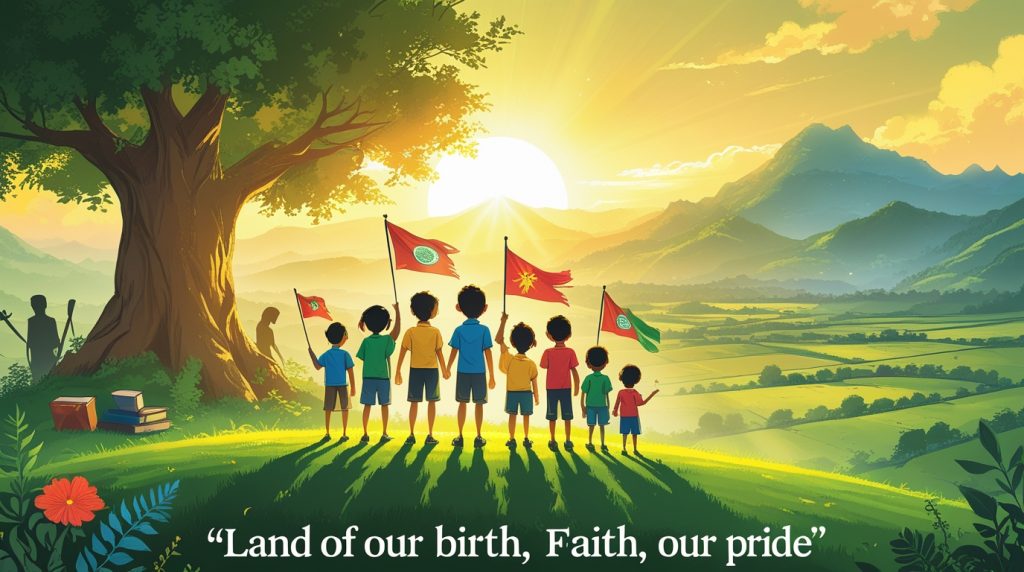
Land of our birth, our faith, our pride,
আমাদের জন্মভূমি, আমাদের বিশ্বাস, আমাদের গর্ব,
For whose dear sake our fathers died;
যার প্রিয় কারণে আমাদের পিতারা প্রাণ দিয়েছেন;
Oh Motherland, we pledge to thee
হে মাতৃভূমি, আমরা তোমার কাছে অঙ্গীকার করছি
Head, heart and hand through the years to be!
মাথা, হৃদয় এবং হাত ভবিষ্যতের বছরগুলোতে!
the children’s song: Important Vocabulary
- Pledge – অঙ্গীকার করা (To make a solemn promise or commitment)
- Toil – পরিশ্রম (Hard work or labor)
- Race – জাতি (A group of people sharing common characteristics)
- Heritage – ঐতিহ্য (Traditions and values passed down from ancestors)
- Steadfastness – দৃঢ়তা (Firmness and loyalty)
- Grace – করুণা (Divine favor or kindness)
- Controlled – নিয়ন্ত্রিত (Kept under discipline or restraint)
- Maimed – বিকৃত (Injured or damaged)
- Sacrifice – ত্যাগ (Giving up something valuable for a greater cause)
- Judge – বিচারক (One who decides what is right or wrong)
- Uncowed – নির্ভীক (Not frightened or intimidated)
- Favour – পক্ষপাত (Special treatment or preference)
- Comfort – সান্ত্বনা (Relief or consolation)
- Distress – দুর্দশা (Extreme sorrow or suffering)
- Delight – আনন্দ (Great pleasure or joy)
- Mirth – হাসি–আনন্দ (Happiness and laughter)
- Forgiveness – ক্ষমা (The act of pardoning someone)
- Evil – মন্দ (Immoral or harmful acts)
- Faith – বিশ্বাস (Strong belief or trust)
- Pride – গর্ব (A feeling of satisfaction and honor)
the children’s song: Summary
The poem is a pledge by children to their motherland and a prayer to God for guidance. The children promise to love and serve their country faithfully when they grow up. They ask God to teach them truth, strength, justice, and self-control so they can live disciplined and righteous lives. The poet emphasizes values like honesty, courage, kindness, and forgiveness, which are essential for building a pure and strong nation. The children also vow to respect the sacrifices made by their forefathers and to work for the welfare of all people. The poem inspires patriotism, moral integrity, and unity among citizens.
Theme of the Poem “The Children’s Song” by Rudyard Kipling
The central theme of the poem is patriotism, moral integrity, and spiritual guidance. It emphasizes the children’s pledge to their motherland and their prayer to God for strength, truth, and righteousness. The poem highlights values such as honesty, courage, justice, kindness, and forgiveness, which are essential for building a pure and strong nation. It also reflects the importance of self-control, discipline, and respect for the sacrifices made by forefathers. Ultimately, the poem inspires unity and a sense of responsibility among future generations to serve their country faithfully.
the children’s song: Questions from English for Today
- What do the children promise to their motherland?
Answer: The children promise their love and loyalty to their motherland and pledge to take their place as responsible men and women of their race. - What do the children ask God to teach them?
Answer: The children ask God to teach them truth, strength, justice, love, and forgiveness so they can live righteous lives. - Do you like the poem? Why?
Answer: Yes, I like the poem because it inspires patriotism, moral values, and unity among people.
the children’s song: Questions for More Practice
(a) What do the children pledge to their land of birth in the poem?
Answer: They pledge their love, loyalty, and dedication to serve their country faithfully.
(b) How do the children express their love for their country in the poem?
Answer: They express love by promising to uphold truth, justice, and sacrifice for their country’s welfare.
(c) What is the main theme of the second stanza of the poem?
Answer: The second stanza focuses on asking God for guidance to live truthfully and courageously.
(d) How do the children want to build a better future according to the poem?
Answer: By being truthful, strong, and just, and by avoiding evil and selfishness.
(e) What does the poet mean by “controlled and cleanly night and day”?
Answer: It means living a disciplined and pure life at all times.
(f) What do the children want to be honest and truthful according to the poem?
Answer: They want to be honest and truthful in their thoughts, words, and actions.
(g) What do the children pray for in the second stanza?
Answer: They pray for strength, truth, and grace to live righteous lives.
(h) What do the children want to learn about truth and courage in the poem?
Answer: They want to learn to speak truth and act courageously in all situations.
(i) What do the children want to be strong and faithful in their community?
Answer: They want to be strong in character and faithful to their duties and responsibilities.
(j) What does the poet say about treating the weak and helping others?
Answer: The poet says to treat the weak kindly and help others without selfish motives.
(k) What is the importance of love and forgiveness according to the poem?
Answer: Love and forgiveness are essential for peace, harmony, and overcoming evil.
(l) What do the children learn about the land and the sacrifices made by their fathers?
Answer: They learn to honor their land and respect the sacrifices made by their ancestors.
(m) What do the children pray to God?
Answer: They pray for strength, truth, justice, love, and forgiveness.
(n) What do the children like to do in their youth?
Answer: They like to learn, grow strong, and prepare to serve their country.
(o) How do the children like to rule themselves?
Answer: They like to rule themselves with discipline, honesty, and self-control.
(s) What sacrifice do they not like to do for the country?
Answer: They do not want to make a maimed or worthless sacrifice for the country.
(t) How do the children want to judge?
Answer: They want to judge by God’s standards, not by the opinion of their friends or the crowd.
(u) How do the children want to walk their path?
Answer: They want to walk their path uncowed by fear or favor of the crowd.
(v) What strength do the children want from God?
Answer: They want the strength that does not harm the weak but comforts those in distress.
(w) What do they want to do with their strength?
Answer: They want to use their strength to help and comfort others, not to hurt the weak.
(x) What delight do the children want from God?
Answer: They want delight in simple things and mirth that has no bitterness.
(y) What does the poet mean by ‘careful truth’?
Answer: It means speaking and living truthfully with caution and responsibility.
(z) What does the phrase ‘in our time’ in stanza 3 refer to?
Answer: It refers to the period when the children grow up and take responsibility as adults.
(z1) Why do the children call their motherland ‘Land of our Birth, our faith, our pride’?
Answer: Because it is the place where they were born, which they believe in and take pride in.
(z2) What do the words ‘head’, ‘heart’ and ‘hand’ in stanza 8 refer to?
Answer: They refer to the children’s intellect (head), emotions (heart), and actions (hand) dedicated to serving their country.
(z3) How does the poet wish to serve his motherland?
Answer: By pledging love, loyalty, and service through head, heart, and hand.
(z4) Why do the children pray to God?
Answer: They pray for strength, truth, justice, love, and forgiveness to live righteous lives.
(z5) What literary devices are used in the poem “The Children’s Songs”?
Answer: The poem uses repetition, alliteration, and imagery to emphasize its message.
(z6) Why is the poem titled “The Children’s Songs”?
Answer: Because it expresses the hopes, prayers, and pledges of children for their future and their country.
(z7) What purpose is served by the repetition of the word ‘our’ in the poem “The Children’s Songs”?
Answer: It emphasizes unity, belonging, and collective responsibility toward the motherland.